It’s been a bit of a rollercoaster for our local town centres this year, hasn’t it? If 2024 was about “finding our feet” post-pandemic, 2025 has been the year the UK high street decided to pull up its socks and get creative.
We’ve seen everything from record-breaking summer sun boosting clothing sales to some pretty tough headlines about store closures. But behind the “To Let” signs, there’s a much more interesting story happening. Let’s dive into the stats that defined the British high street in 2025.
The Footfall Fluctuation: Quality Over Quantity
The biggest takeaway from 2025 is that while fewer of us are popping into town, we’re staying much longer when we do.
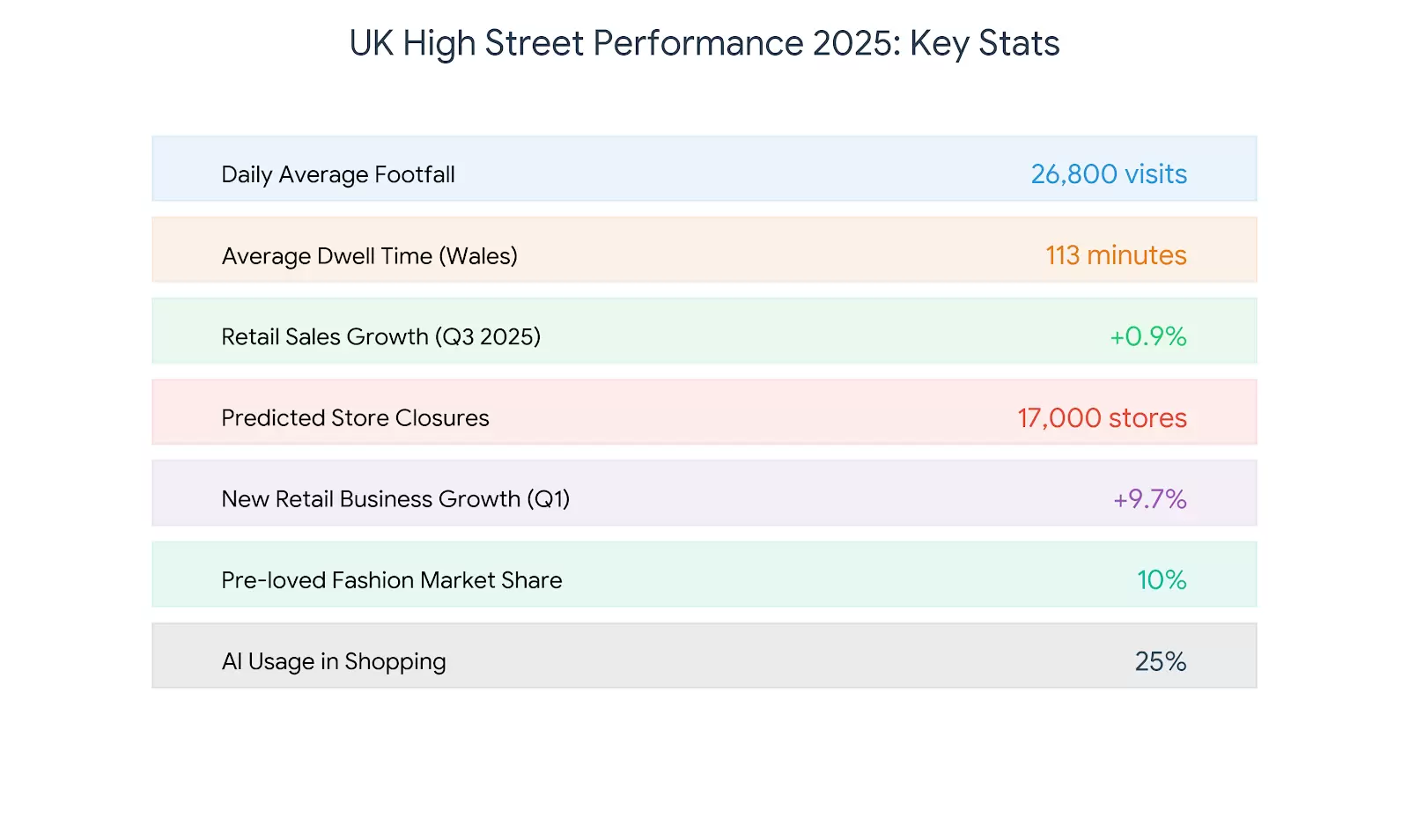
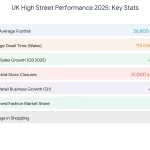
According to data from Huq Industries, average daily visits to high streets sat around 26,800 earlier this year. That’s a slight dip compared to 2024, but here’s the kicker: dwell time (how long we actually stay in the shops) has shot up. In places like Wales, shoppers were staying for an average of 113 minutes per visit!
It seems we’re ditching the “quick nipping in” for a full afternoon out. We’re grabbing a coffee, browsing the rails, and making a day of it.
Retail Sales: A Mixed Bag
The Office for National Statistics (ONS) gave us some “glass half full” news. Retail sales volumes actually rose by 0.9% in Q3 2025.
- Winners: Clothing stores and online jewellers (people were apparently very keen on buying gold this year!).
- Losers: Supermarkets and fuel stations had a bit of a wobblier time as we all tightened our belts on the weekly shop.
The “Black Friday” effect also started earlier than ever, with many retailers offering discounts throughout November to keep us spending despite the cost-of-living squeeze.
The “Store Closure” Elephant in the Room
We can’t ignore the tough stuff. The Centre for Retail Research predicted that over 17,000 stores would close their doors in 2025. High business rates and rising National Insurance costs for employers have made it a “perfect storm” for some of our favourite chains and independent boutiques.
However, it’s not all doom and gloom. Interestingly, ONS data showed a 9.7% rise in new retail business creations in the first quarter of the year. For every big name that leaves, a plucky new independent or “pop-up” seems ready to give it a go.
What’s the Vibe? 2025’s Biggest Trends
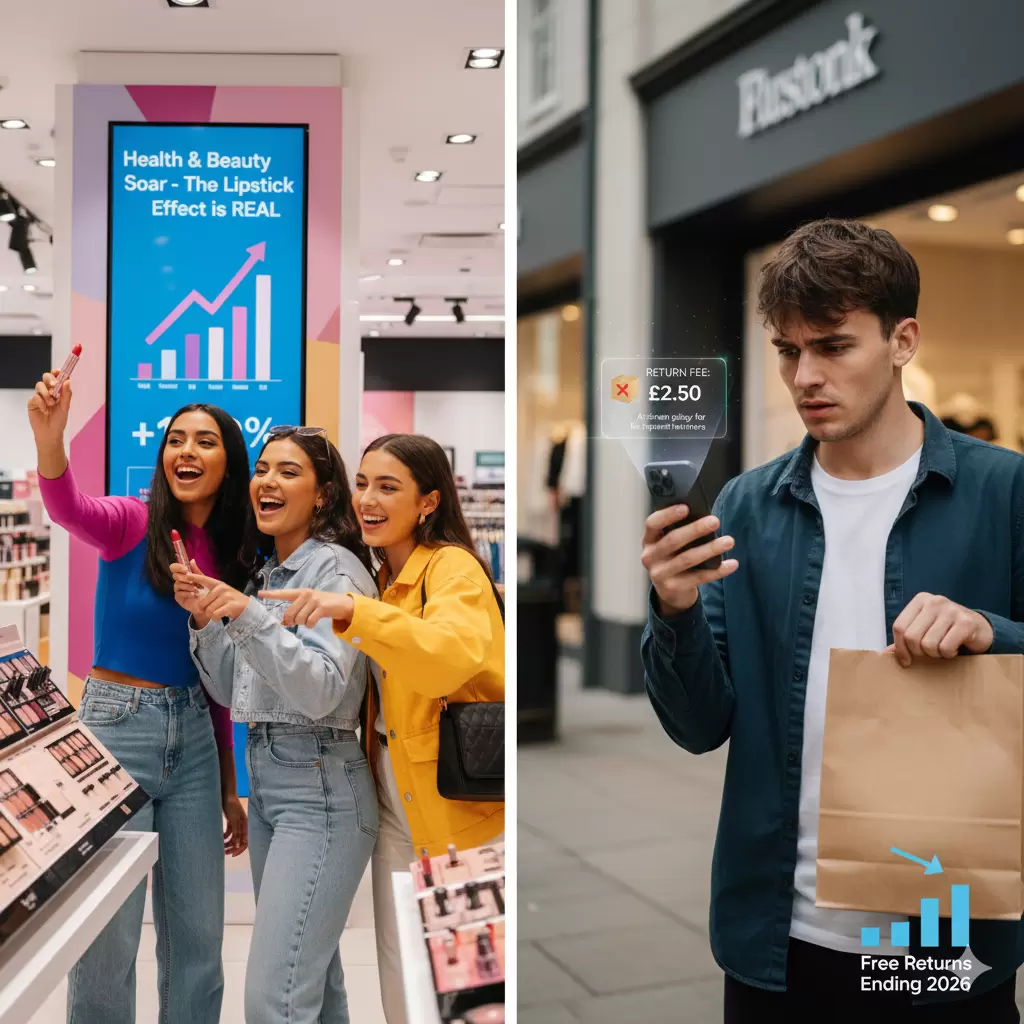
- The “Lipstick Effect”: Even when money is tight, we still want a treat. Health and beauty sales have stayed rock-solid, especially with Gen Z shoppers.
- Pre-Loved is the New Premium: Platforms like Vinted and high-street charity shops are booming. Second-hand fashion now makes up roughly 10% of all fashion sales in the UK.
- AI Assistants: If you’ve used a chatbot to find your size lately, you’re not alone. Around 25% of us are now using AI-powered tools to help us shop.
Looking Ahead: What’s in Store for 2026?
As we peer into the crystal ball for 2026, the word of the year is going to be “Profitability.” Retailers have spent 2025 surviving; in 2026, they’ll be looking to thrive by getting smarter.
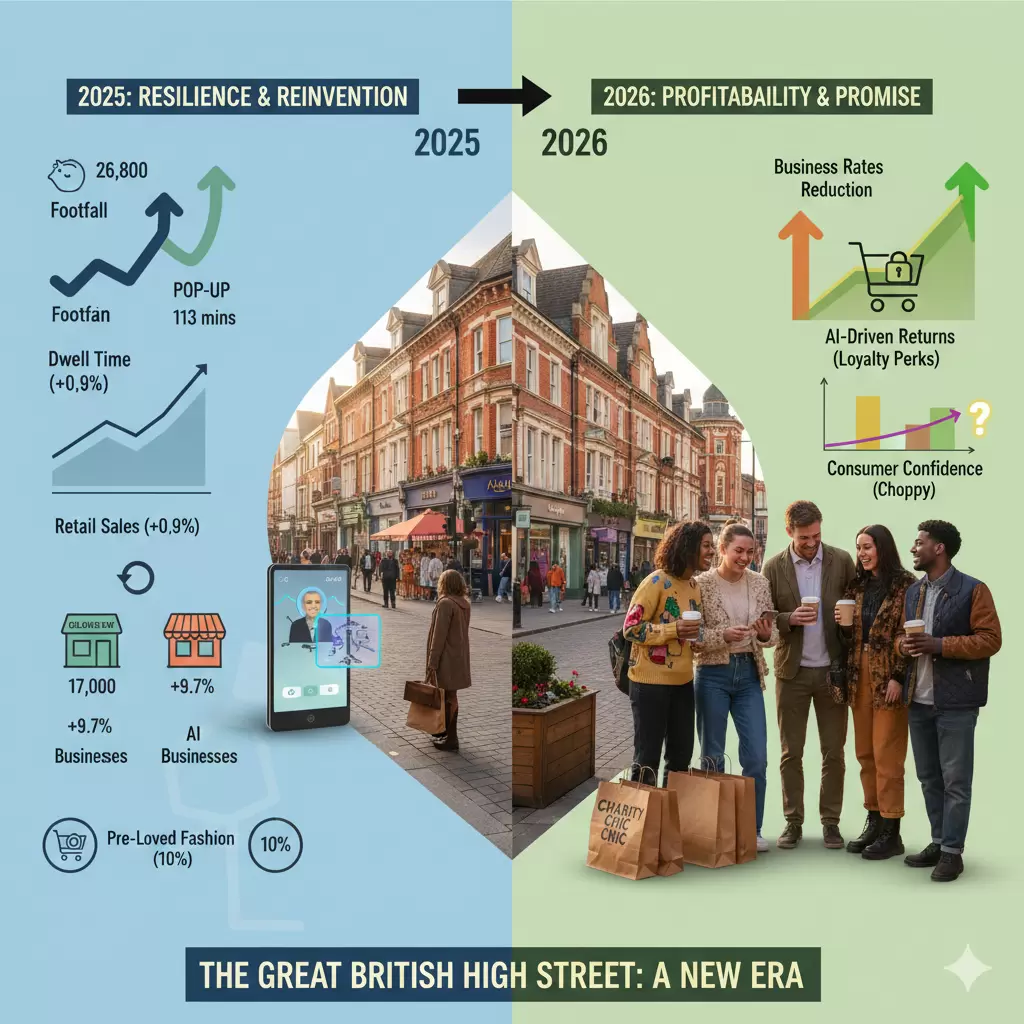
We expect to see a huge shift in how we return items. The days of “free returns for everyone” are likely coming to an end. Forrester predicts that major retailers will start using AI to offer perks only to their most loyal, low-return customers. If you’re a “serial returner,” 2026 might be a bit more expensive for you!
The good news? The government has tipped a permanent reduction in business rates for high-street properties from April 2026. This could be the “spark” our town centres need to fill those empty units. While consumer confidence might remain a bit “choppy” according to RSM UK, the high street is far from dead—it’s just having a massive makeover.



No responses yet